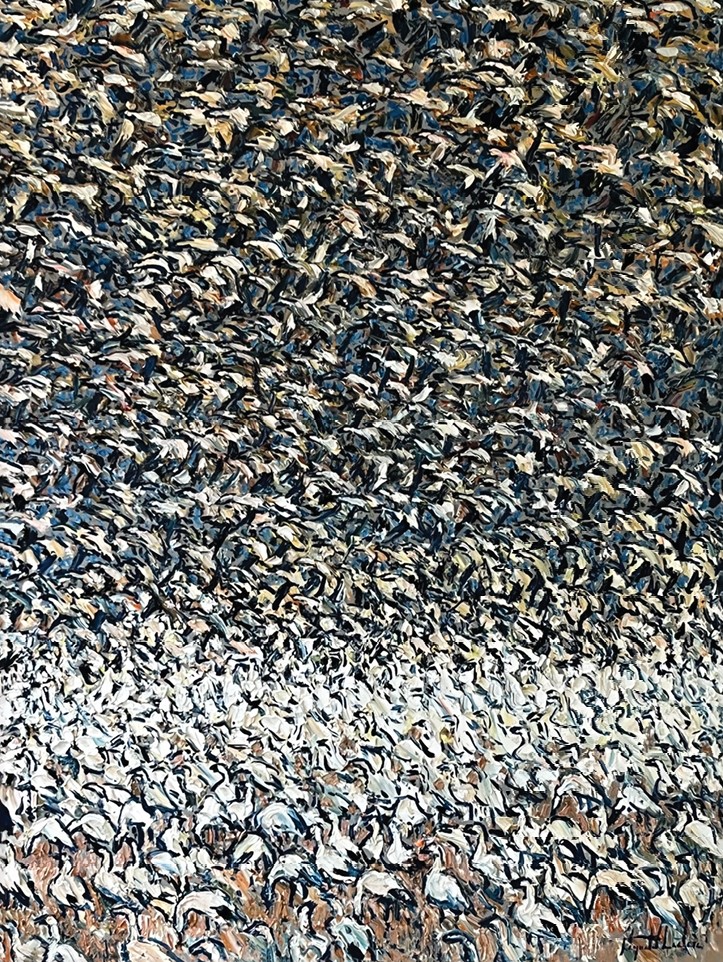
L’artiste peint ce qu’il voit : un objet, sa lumière, un paysage…
Les œuvres de Raynald Leclerc, celles de son pays et de ses saisons, depuis toujours, ont été prétextes à jouer avec la matière, les ombres et la lumière.
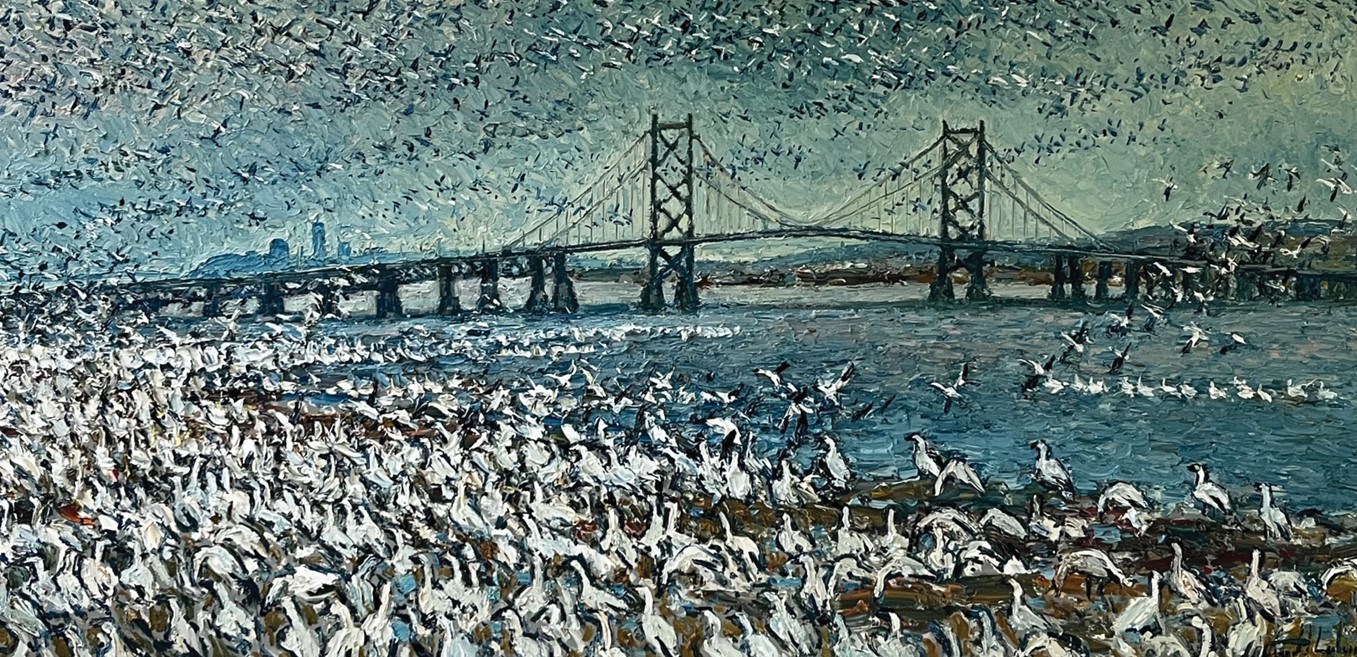
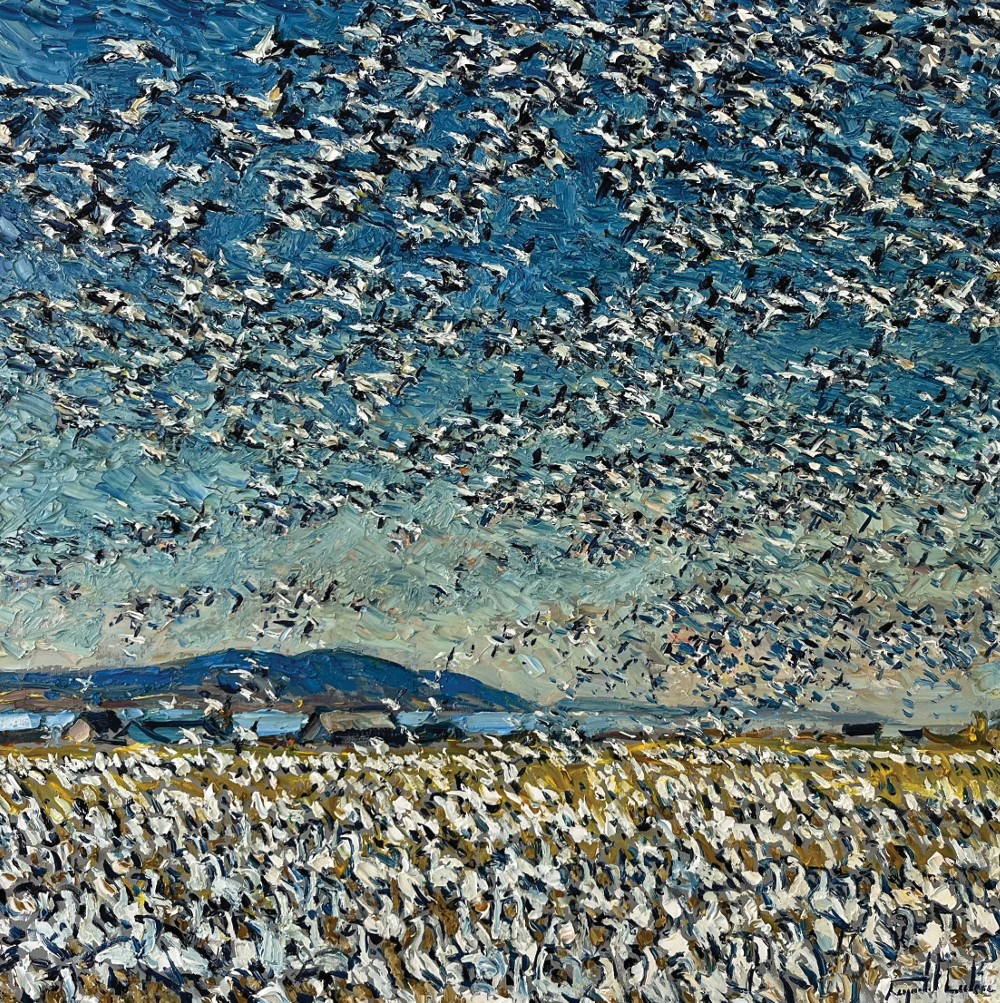
L’histoire débute il y a longtemps sur les rives du Saint-Laurent, dans Bellechasse, à l’est de Québec, là où a grandi Raynald Leclerc. Tous les jours, il voyait passer des navires, des canards et des sarcelles; deux fois l’an, des bernaches. Les oies y venaient plus rarement, elles arrivaient par centaines, par milliers sur les terres, capables de nettoyer tout un champ déjà fauché par les humains. À chaque fois, un spectacle, une joie, celle de la vie en abondance!
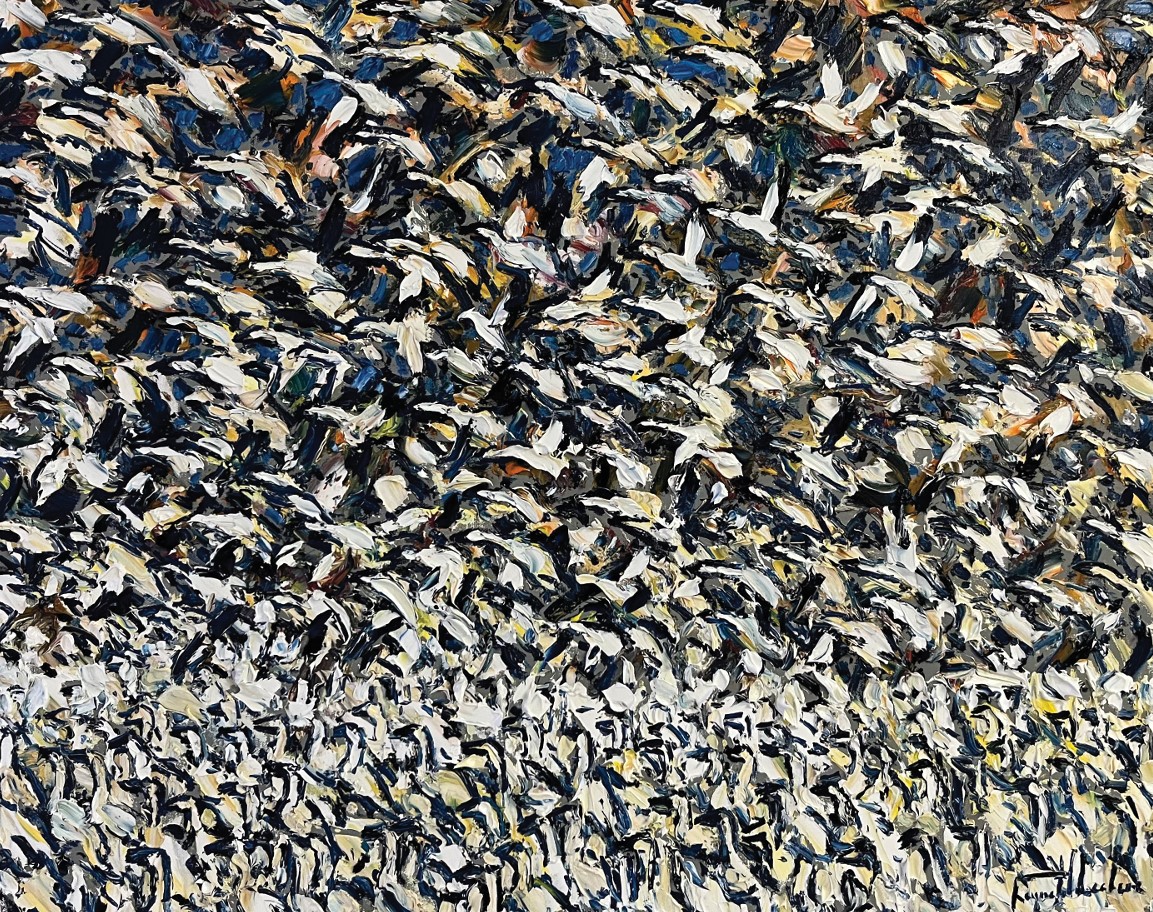
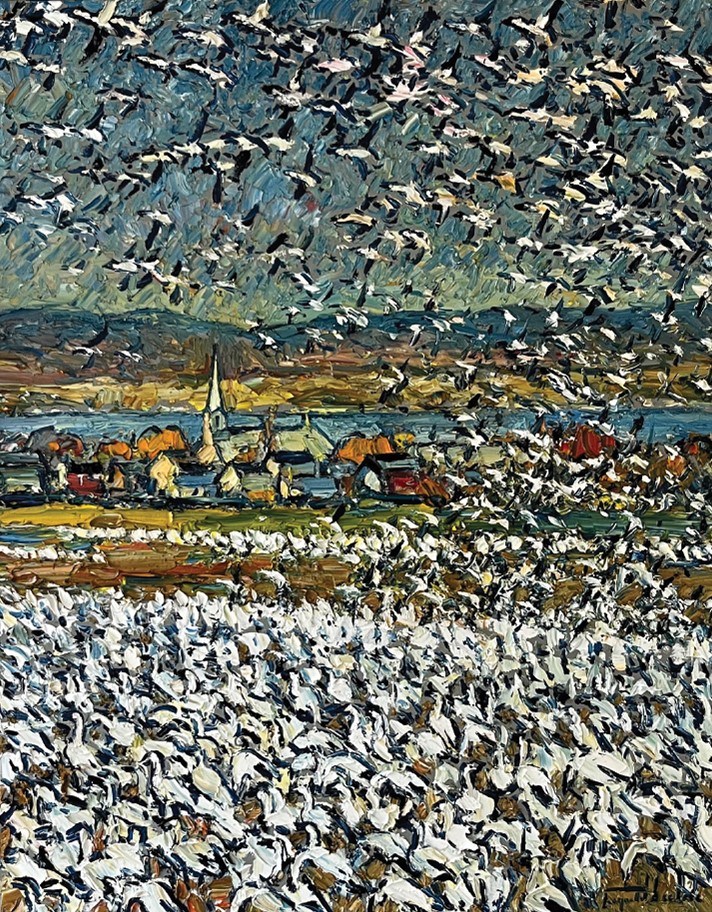
À la manière de ses ancêtres, fidèle à son pays, l’enfant deviendra chasseur, ne serait-ce que pour recharger l’œil du peintre. Mais les oies sont intelligentes… pour les tromper et les piéger, on doit beaucoup les observer. C’est qu’il faut les comprendre. Elles marqueront le passage des ans et, paisiblement, prendront possession de l’âme de l’artiste. Un jour, il vendra ses armes…
Le sujet des oies blanches s’est imposé, à travers et entre les souvenirs du peintre, tel un prolongement de son âme, de son esprit et de ses jeux. L’élan est intérieur, né d’une émotion, d’un sentiment peut-être enfoui depuis toujours, peut-être issu de la conscience, prêt à émerger. Il engage la création.
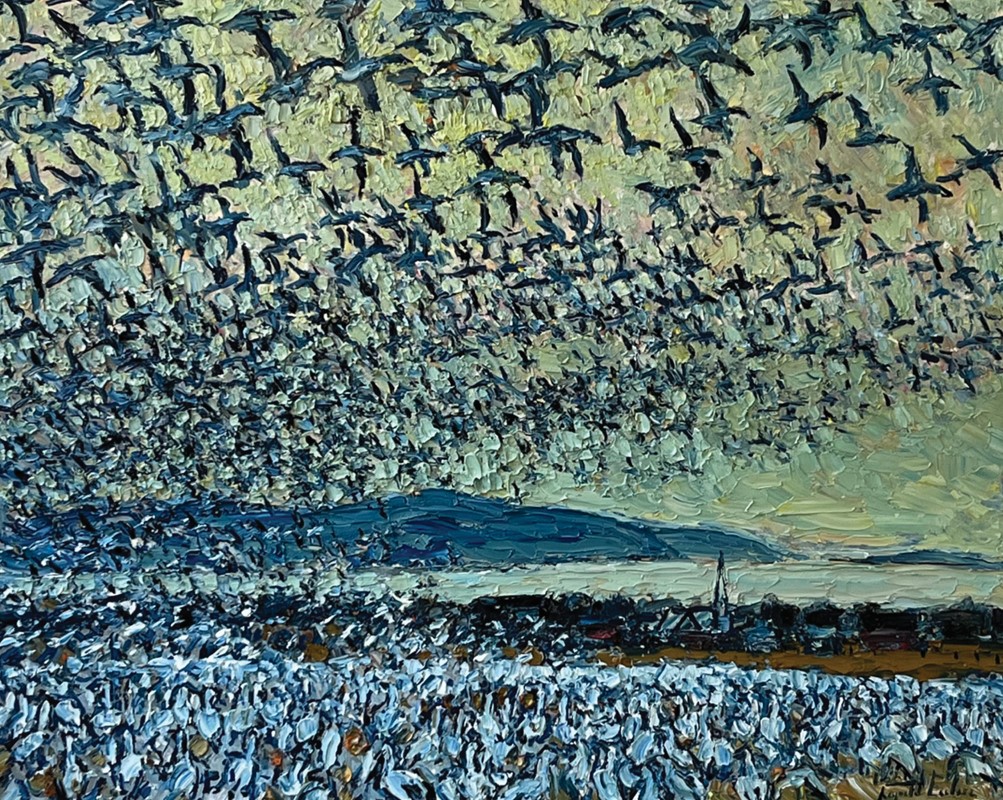
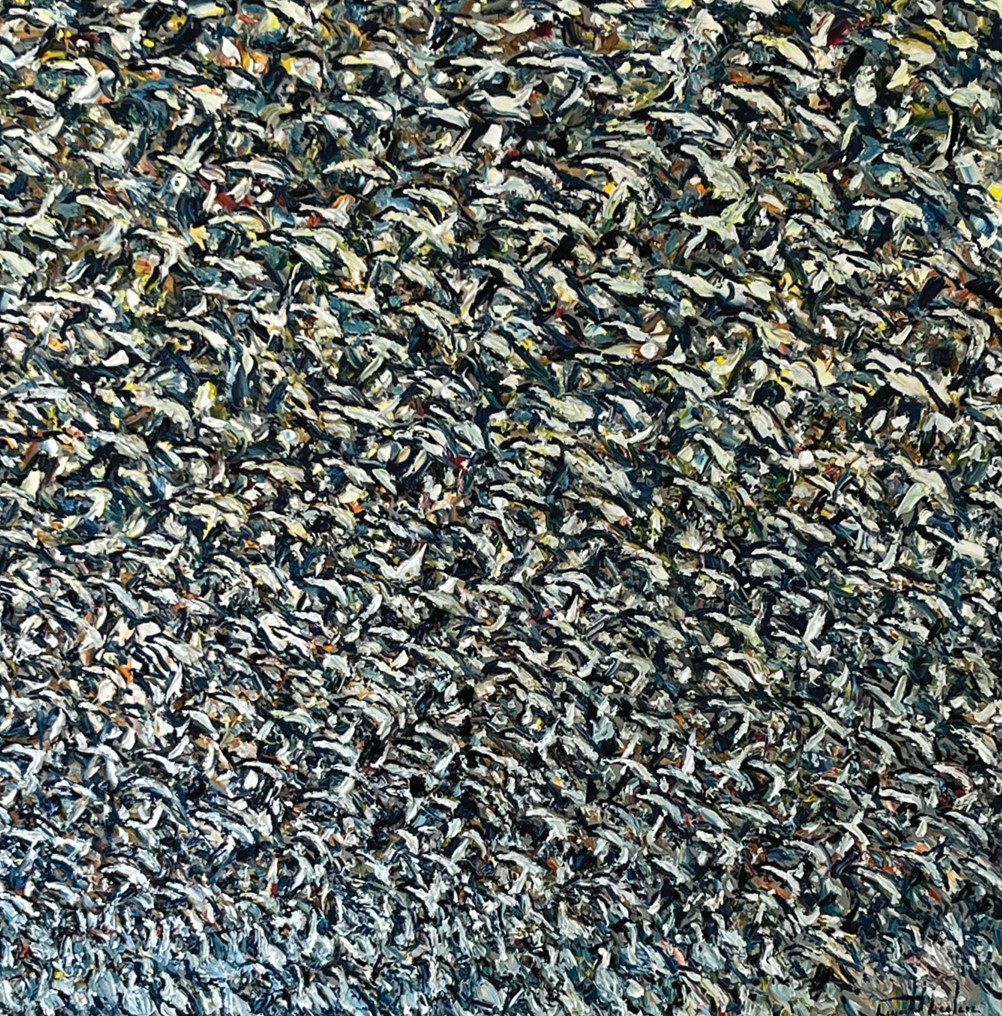
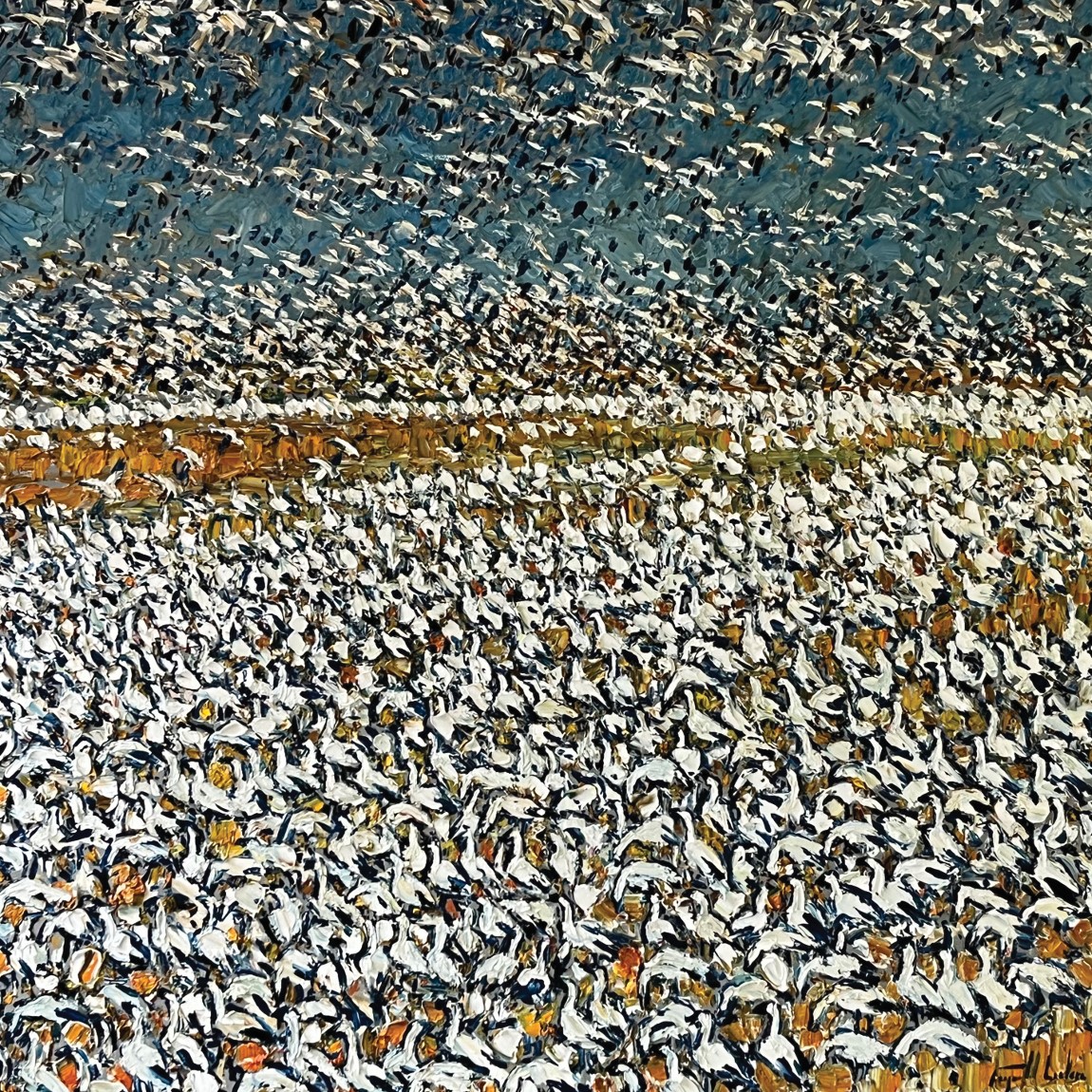
Comment, du fond d’un atelier, peindre un spectacle à la fois éphémère et grandiose, peindre le temps qui fuit et les amours durables? À la manière des Automatistes, Pollock, Riopelle, Ferron, le peintre couvre d’abord la toile de matière, de taches, provoquant évènements et accidents, puis son esprit agit. Entre les souvenirs lointains, presque inconscients, les oies émergent de la toile, commencent à exister une à une. Dans les entrelacs, de l’artiste à la toile, des familles d’oies apparaissent et se posent sous la lumière du champ. Le jeu devient alors plus mathématique, plus abstrait; un jeu de l’esprit où la matière prend forme, où une nouvelle écriture donne vie au réel, où les taches deviennent poissons, puis oiseaux.
Ici, la modernité pourrait tenir de la ligne fine et risquée qui sépare le chaos de la création. Elle tient, peut-être davantage, d’avoir offert au spectateur un regard neuf, et ce, pour le plaisir du jeu et le bien-être des oies.
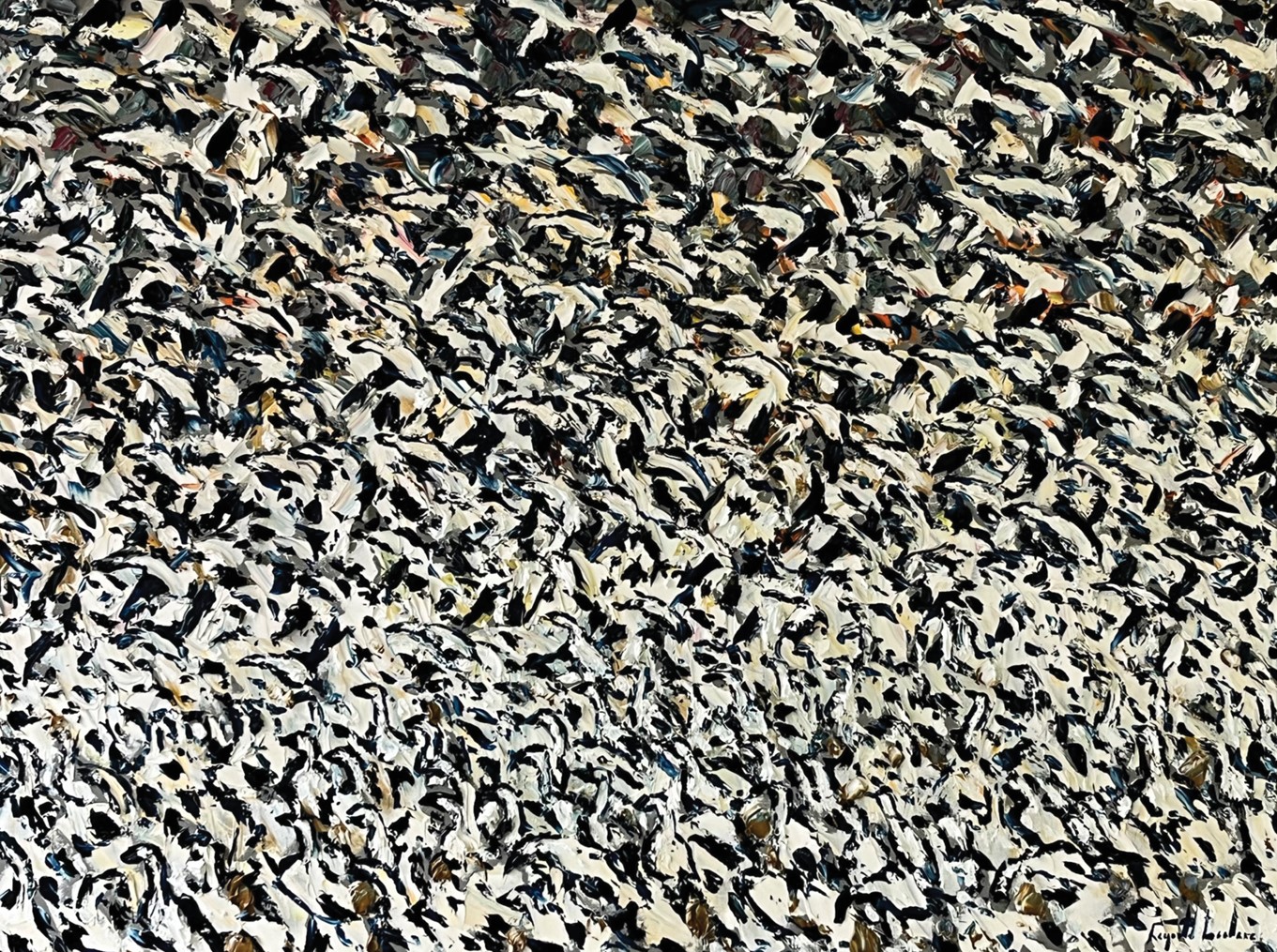
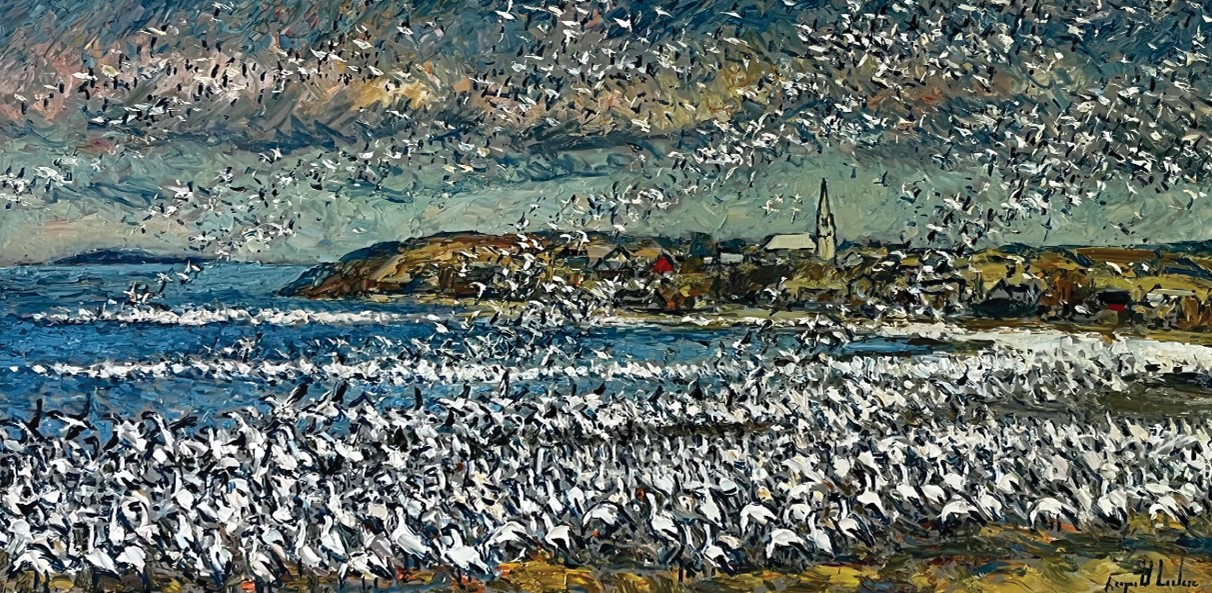
Taking Flight: Movement and Multiplicity…
Nature lends itself to inspiration, to flights of imagination. The gift of the great painter is in translating the memories, thoughts, feelings, and dreams brought out by nature onto the canvas; the pleasure of the viewer is in sharing the artist’s vision, which enables us to see nature in a new light. Painting also lends itself to imagination and inspiration, creating a sort of understanding with the painter. For several decades Raynald Leclerc has given us his vision, his version of nature. His paintings never fail to induce dreams and meditations on nature: whether it’s through a twisted tree, a rocky slope, flowing waters, or skies coloured by the whims of changing light.
The only animal that seems to have captured the imagination and palette of Raynald Leclerc during the course of his work is the goose, which is hardly surprising since it’s emblematic of Canada and also a subject for several other artists. But whereas a painter like Jean Paul Riopelle chooses to depict the goose in its purity, its plasticity, and its singularity, Raynald Leclerc is almost always attracted by its movement and its multiplicity. According to Leclerc, “I never draw, I create shapes that inspire me and move me toward memories, without boundaries but rather toward an expansion of vision.”
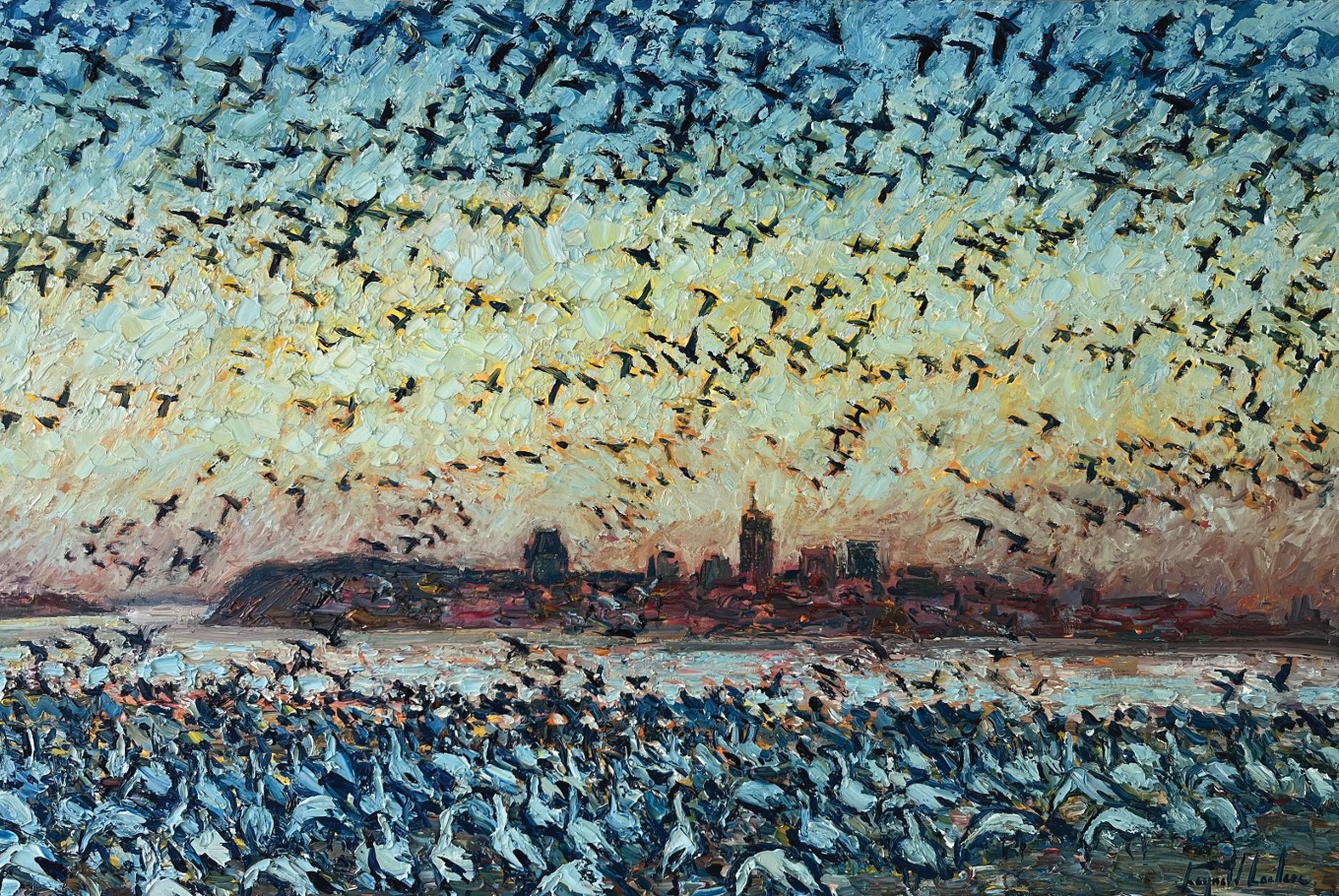
Leclerc is especially drawn to geese taking flight, to the moment of departure, in its multiple colorations and configurations, much like Monet with his water lilies. In this recent example, by looking at the painting from bottom to top the viewer’s eye and imagination can follow the flight of the geese in all of its stages.
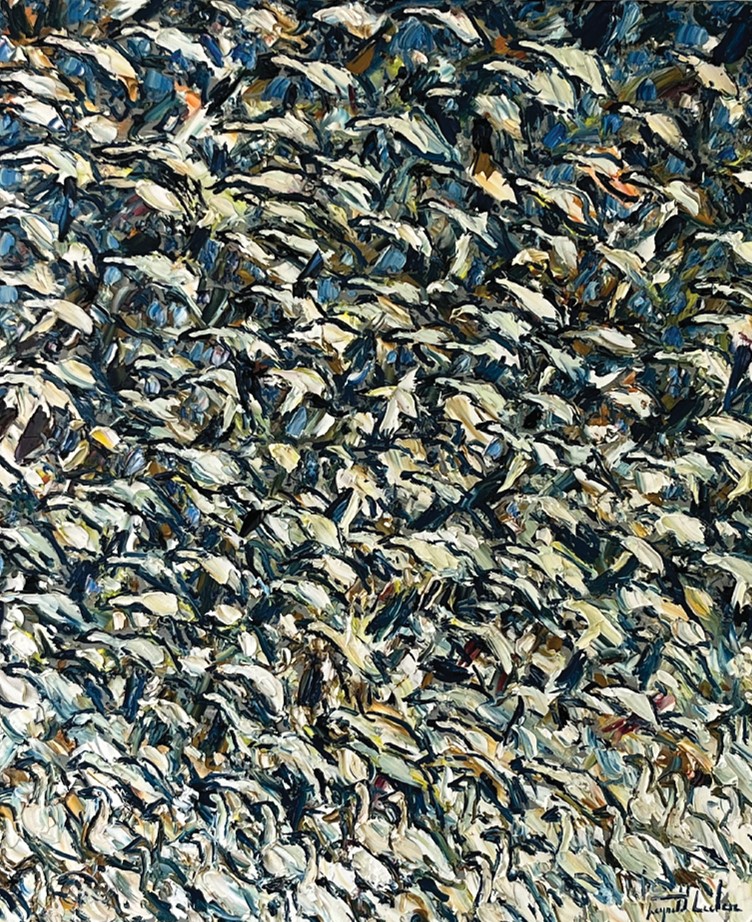
In the rustling, the taking flight, the unfolding, the voyage, and the eventual finding of direction and taking form, ending with a “bird’s-eye view,” an analogy between the flight of the bird and the process of artistic creativity seems unavoidable, as well as for the viewer, perhaps, the feeling of an idea forming, an aspiration unfolding, an adventure taking shape.
At the same time, in this seemingly chaotic mass, each element ends up assuming its place organically in a coherent multitude, where each individual piece contributes to the whole. There is no doubt an artistic dimension in this creation of form, but there is also perhaps a social dimension in the sense that the movement of the flock is already collective and coordinated, a sign of the cooperation that will be required by the migratory voyage. In effect each bird will have a role to play in the nourishment, protection, communication, and advancement of the community, to the point where there will be a permanent rotation of places in the famous V formation to conserve the energy of those on the flanks and thus ensure the progress of the flock toward its destination.
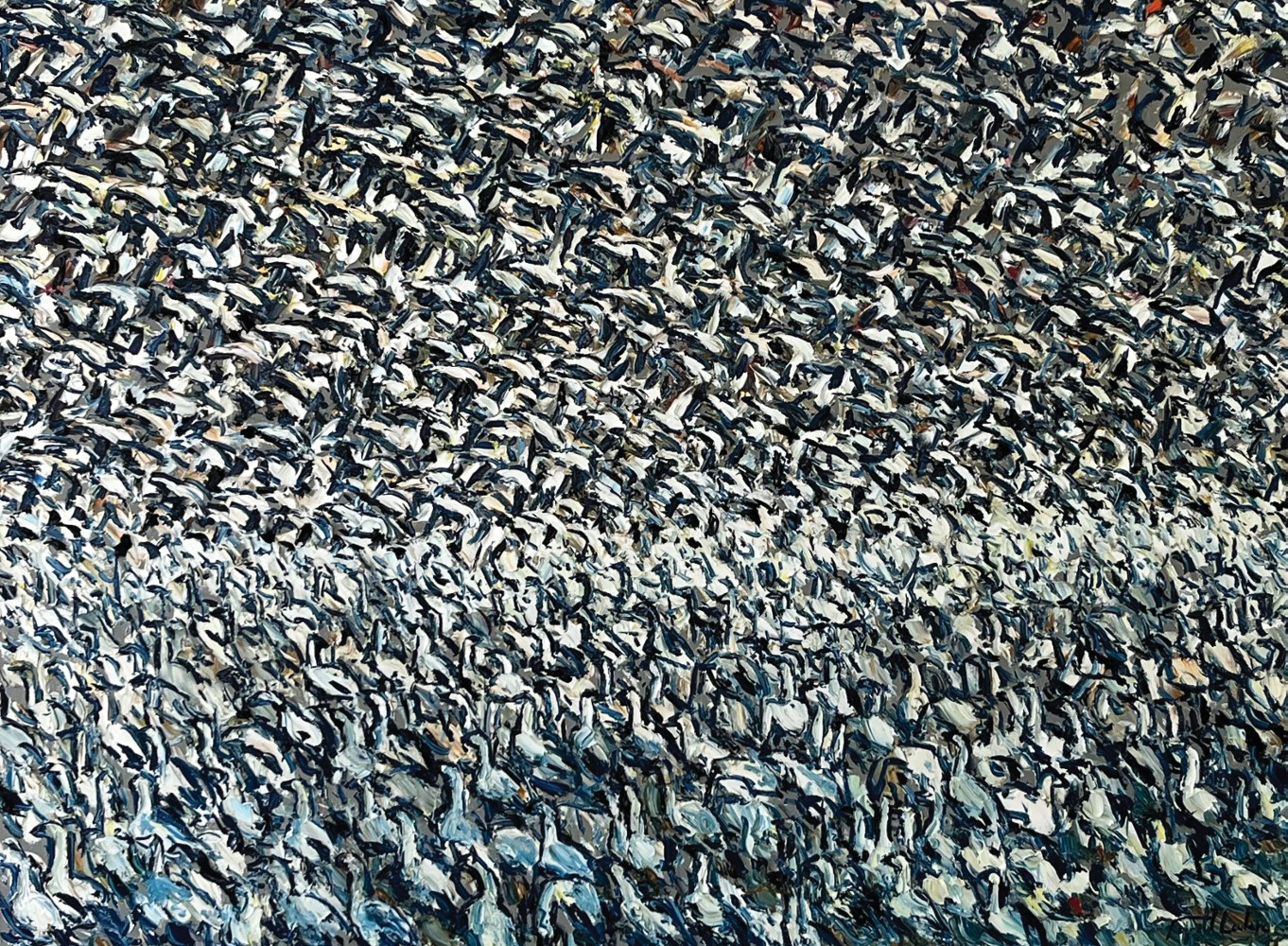
For the painter, like the poet, creation is no doubt a solitary act, as some artists underscore: for Mallarmé a swan is frozen in the ice, a sign of its impotence; for Baudelaire an albatross is captured by the crewmen of a ship, who mock its awkwardness. For Raynald Leclerc, however, the flight of a flock of geese exudes at once a sense of freedom and collective solidarity, which explains, perhaps, why this fascinating bird has become an emblem of Leclerc’s art and also of the Canadian spirit.
Texte / Text :
Robert Filion
William J. Berg